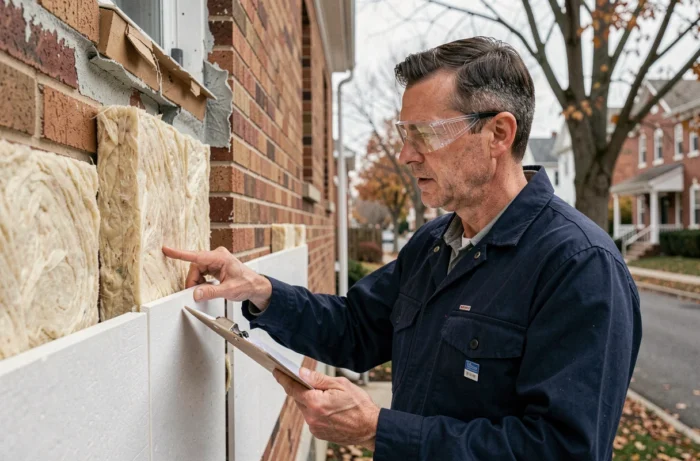
The French residential sector accounts for a massive share of national energy consumption. Public authorities regularly adjust aid schemes and regulatory obligations to accelerate the renovation of the least efficient housing. Since September 1, 2026, the refocusing of MaPrimeRénov’ on electrification profoundly changes the way an energy renovation project is constructed and financed.
Energy Renovation and Refocusing of MaPrimeRénov’: What Changes Since September 2026
The MaPrimeRénov’ scheme has undergone a major reorientation. The State is redirecting 3.6 billion euros towards the electrification of housing, concentrating aid “by gesture” on heat pumps, connection to a heat network, and the removal of oil tanks. Isolation work, window replacement, or ventilation are no longer individually subsidized.
These items remain fundable, but only as part of a large-scale renovation. The obligation then focuses on achieving at least a two-class improvement in energy performance, with an eligible expenditure ceiling set at 30,000 euros excluding tax for a two-class improvement and 40,000 euros excluding tax for three classes or more. Understanding the logic behind energy renovation work on buildings now requires integrating this constraint from the project’s design phase.
In practice, a homeowner wishing to insulate their attic without touching the heating system no longer benefits from MaPrimeRénov’ aid by gesture. They must either finance it themselves or expand the scope of work to reach the threshold for large-scale renovation. This shift alters the hierarchy of priorities for many households.

Drop in Global Renovation Applications: A Warning Signal on the Ground
Data published by Anah reveals a decrease of about 75% in global renovation applications between the first half of 2025 and the first half of 2026. The volume dropped from about 95,000 applications to less than 25,000 during the same period.
Several factors explain this decline. The administrative complexity of the “large-scale renovation” process deters individuals. The requirement to use an approved Renov’ advisor, the need to coordinate multiple trades, and the overall financial setup discourage some homeowners who might have opted for simpler isolated gestures.
Field feedback varies on this point: some RGE professionals observe a postponement of projects rather than a definitive abandonment, while others note a clear decrease in demand, particularly among middle-income households that do not benefit from the highest coverage rates.
Energy Audit and DPE: Distinguishing the Two Diagnostics Before Launching a Project
Confusion between DPE and energy audit remains common. The DPE ranks the housing on a scale from A to G and provides an estimate of annual consumption. The energy audit goes further: it details work scenarios, quantifies expected gains by item, and proposes a renovation trajectory.
Since the implementation of large-scale renovation obligations to access MaPrimeRénov’, the energy audit has become the reference document for the file. The DPE alone is no longer sufficient to submit an aid request for a global renovation. It remains useful for sale or rental, but does not replace the audit in a financed work context.
What the Audit Must Contain to Be Usable
A serious audit is not limited to a list of generic recommendations. It must integrate the actual characteristics of the building (wall thickness, nature of existing insulation, state of ventilation), architectural constraints, and interactions between work items.
- The step-by-step renovation scenario, with the order of interventions and cumulative gains at each phase
- The global renovation scenario, with the estimated cost and expected DPE class gain
- Identified thermal bridges and their contribution to losses, to prioritize interventions
- The compatibility between the existing ventilation system and the level of airtightness aimed for after insulation
An audit that proposes replacing heating without mentioning the state of the thermal envelope indicates a lack of rigor. Insulation and ventilation condition the sizing of heating, not the other way around.

EPBD Directive and Rental Ban Schedule: European Regulatory Pressure
The European directive on the energy performance of buildings (EPBD), revised in 2024, requires member states to set renovation trajectories for their residential stock. France must transpose these requirements into national law, which could strengthen obligations on landlords.
The French schedule already anticipates a gradual ban on renting thermal sieves. Properties classified as G have been affected since 2025, and those classified as F will follow. Landlords of properties classified as F or G must anticipate these deadlines to avoid being unable to rent.
The EPBD directive adds another layer of constraint: it sets average consumption targets for the residential stock to be achieved by 2030 and 2035. The available data does not yet allow for conclusions on the exact levels of thresholds that France will adopt for transposition, but the trend points towards a gradual tightening.
Gesture Renovation or Large-Scale Renovation: A Financial Decision
Before September 2026, a homeowner could insulate their attic with a gesture aid, then change their windows the following year with another aid. This sequential approach is no longer financially supported by MaPrimeRénov’ for insulation and ventilation items.
The decision boils down to two options:
- Carry out a coordinated large-scale renovation to benefit from aid, with a heavier initial investment but potentially manageable remaining costs thanks to subsidies
- Finance isolated gestures from personal funds, knowing that energy savings certificates (CEE) can still cover part of the cost for certain works
The choice depends on the current DPE ranking, the available budget, and the holding horizon of the property. An owner-occupant in a property classified as D does not face the same constraints as a landlord with a property classified as F subject to an imminent rental ban.
The restructuring of public aid makes financial setup more technical than before. Consulting a France Rénov’ advisory space remains the first useful reflex, if only to verify the actual eligibility of the project before requesting quotes from RGE artisans.