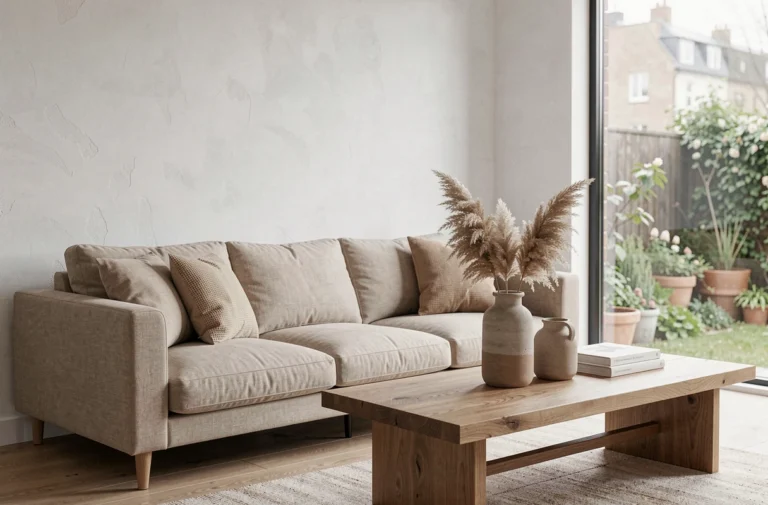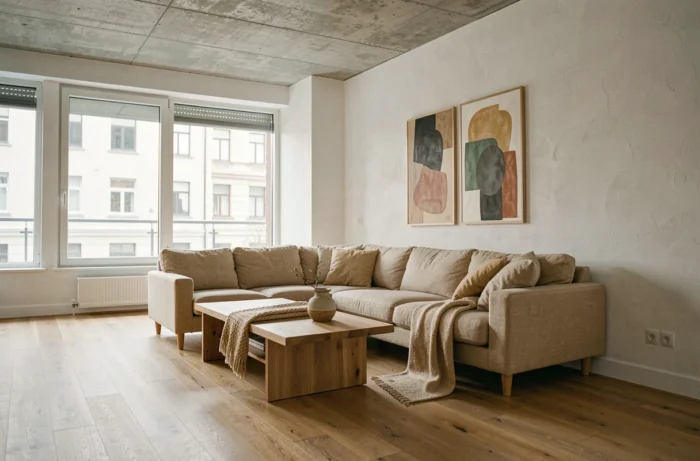
A repainted wall in the living room, a new floor covering in the kitchen, a vintage piece of furniture for the bedroom: each decorative intervention changes the atmosphere of a room, but also the quality of the air we breathe. Before choosing a color or material, it’s wise to check what the product actually emits, not just what it visually promises. Here are concrete ideas, room by room, for decorating without sacrificing style or comfort.
Emission labels and decoration: what the A+ class changes
When buying paint, laminate flooring, or a wooden panel to dress a wall, the first reflex should be to turn over the pot or packaging. Since September 1, 2013, construction and decoration products sold in France must carry a label graded from A+ to C indicating their emissions of volatile pollutants. This requirement covers paints, varnishes, adhesives, floor coverings, and certain panels.
In practice, many consumers are unaware of this label or confuse it with an ecological label. The difference is simple: the label measures what the product releases into indoor air once installed, not how it was manufactured. A varnish rated C in a fifteen-square-meter living room can degrade air quality for several weeks, even with a window slightly open.
For common decoration (wall paint, plaster, wallpaper adhesive), it is recommended to only choose products rated A+. Opinions vary on this point when it comes to technical adhesives for soft floors, where the choice in A+ remains somewhat limited, but the trend is expanding every year. You can now find selections on the home page of Votre Déco that facilitate this sorting by room and use.
Living room: raw materials and muted palette
The living room often concentrates the largest decoration budget, and it is also the room where we spend the most awake time. Starting from a constraint helps frame the choices: if the living room receives little natural light, an accent wall in a muted tone (terracotta, sage green, slate blue) works better than an off-white that will appear gray.
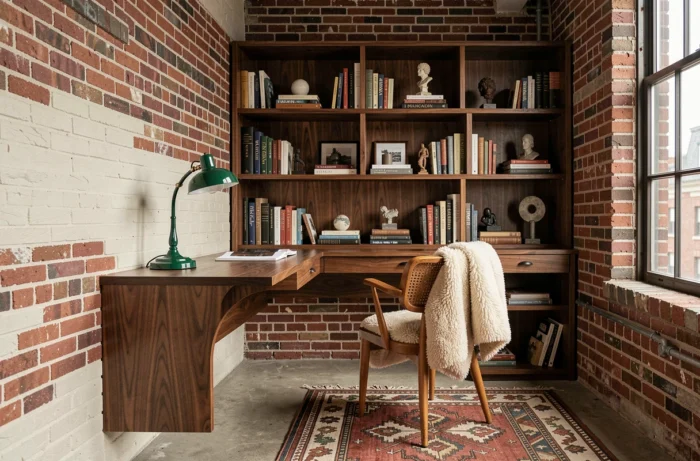
Raw wood remains a safe bet for structuring a living room without falling into the already dated total Scandinavian look. We are talking about solid wood or veneer on a low-emission substrate, not low-quality melamine panels that release volatile organic compounds for months. A new particleboard piece of furniture benefits from being aired out for several days in a garage or on a balcony before integrating into the living room.
On the textile side, current trends favor washed linen for cushions and curtains, and boucle for seating. These materials add texture without visually overloading the space. Accumulations are avoided: three well-chosen cushions are better than eight mismatched ones.
Combining vintage and contemporary without a false note
A vintage armchair from the 1970s placed opposite a black metal coffee table creates a contrast that adds character. The operational rule: limit vintage pieces to one or two per living area to avoid a flea market effect. The rest of the furniture remains understated, with straight or slightly rounded lines.
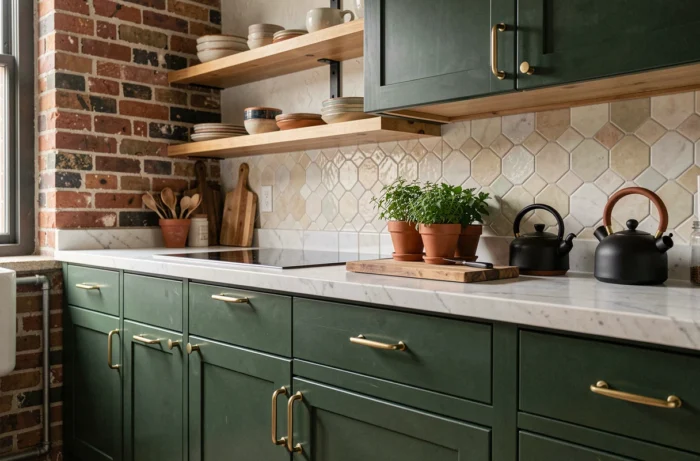
Kitchen: durable coverings and bold colors
The kitchen faces constraints that the living room ignores: grease splashes, water vapor, temperature variations. Decoration choices must incorporate these parameters from the start.
- Large format tiles (solid color, thin grout) replace glass backsplashes advantageously, which are more fragile and more expensive to replace in case of impact.
- Matte laminate cabinet fronts resist fingerprints better than glossy lacquer, while providing a contemporary look.
- A solid wood countertop treated with oil requires regular maintenance (oiling every six months or so), but ages with more character than wood-look laminate.
A strong color on a central island or a row of low cabinets is one of the most effective choices for energizing a kitchen without repainting everything. Forest green, midnight blue, or terracotta work particularly well when the rest of the room remains neutral.
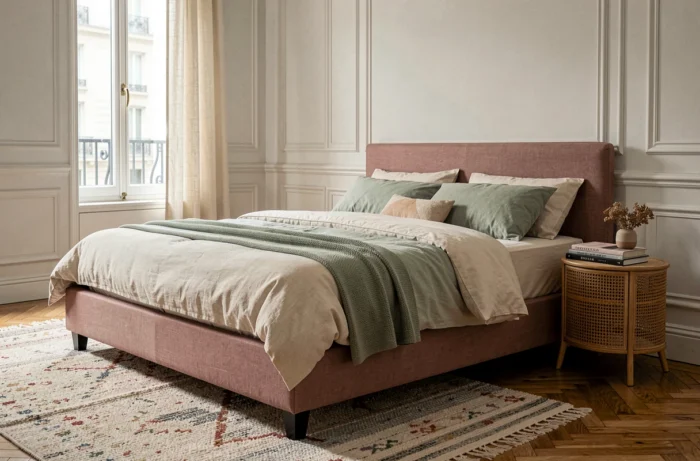
Adult bedroom: paint, light, and thermal comfort
We sleep in this room for eight hours a night, making it the area where air quality matters most. Choosing A+ rated paint is not a luxury but a minimum. So-called “depolluting” paints exist, but their real effectiveness depends on the volume of the room and air renewal.
For the headboard wall, a non-woven wallpaper with a discreet graphic pattern is a better alternative to accent paint if you’re looking for visual depth. Non-woven wallpapers are easier to install than traditional wallpapers and peel off cleanly, allowing for a decor change without heavy work.
Light and textiles to modulate the atmosphere
A dimmer switch on the main lighting and an adjustable reading light on each side of the bed are sufficient to cover all uses (reading, soft ambiance, functional lighting). Warm color temperatures, around 2700 K, are preferred.
Bedding made of linen or cotton percale contributes to thermal comfort in both summer and winter. These materials breathe better than synthetic satin and withstand frequent washing without losing their shape.
Bathroom: small volumes, big effects
In a bathroom of just a few square meters, the choice of wall covering determines the entire atmosphere. Handmade zellige, with its surface irregularities, captures light differently depending on the angle and adds depth to a narrow space.
- An oversized mirror (full width of the vanity unit) visually enlarges the room better than two separate mirrors.
- Brushed brass or matte black faucets add a contemporary touch without requiring major work.
- A wall-mounted vanity unit frees up the floor and makes cleaning easier, two practical advantages in a humid space.
Ventilation remains the technical point not to be neglected. Even with low-emission materials, a poorly ventilated bathroom accumulates moisture and encourages mold, which degrades both air quality and aesthetics. Checking the proper functioning of the mechanical ventilation system before laying new tiles avoids many disappointments.
Decorating room by room while considering the real constraints of each space (light, humidity, time of occupancy, air quality) produces more durable results than purely aesthetic makeovers. Natural materials, bold colors, and A+ rated products form a reliable foundation on which to build a lasting interior.