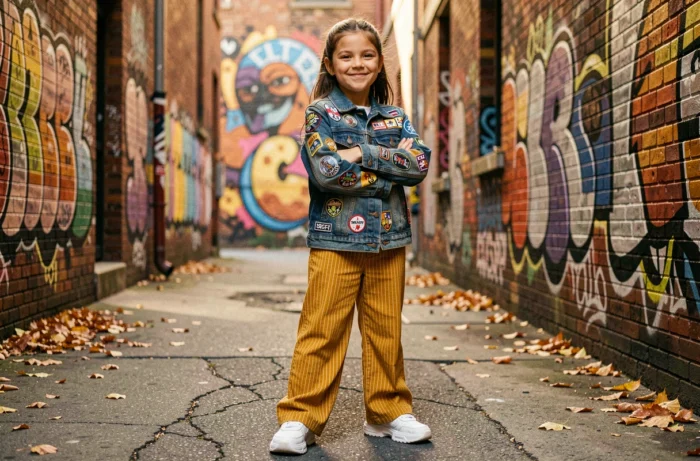
Children’s fashion known as “original” encompasses very different realities depending on the brands: some focus on graphic prints, others on cuts borrowed from adult streetwear, and others still on raw materials and neutral tones. To gain clarity, comparing these approaches based on concrete criteria (textile composition, regulatory compliance, durability of pieces) helps distinguish the style genuinely designed for children from mere marketing arguments.
Textile Composition and Comfort: What Separates Creative Approaches
The choice of fabric determines both daily comfort and the longevity of a children’s garment. Brands that claim a creative positioning do not all use the same textile bases, and the differences are significant.
| Creative Approach | Dominant Materials | Main Advantage | Common Limitation |
|---|---|---|---|
| Children’s streetwear (prints, oversized cuts) | Standard cotton, blended polyester | Accessible price, wide choice of patterns | Average breathability, quick wear after washes |
| Bohemian / artisanal fashion | Cotton gauze, linen, organic cotton | Softness, breathability, sensitive skin preserved | Wrinkling, more demanding maintenance |
| Creative vintage / second-hand | Denim, thick cotton, blended wool | Unique pieces, sustainable approach | Sizes sometimes approximate, random availability |
| Graphic minimalism | Certified cotton, organic jersey | Versatility, timeless look | Limited color palette |
Parents looking for a rebellious style for their child often turn to streetwear or vintage. In contrast, those who prioritize skin sensitivity direct their choices towards organic cotton or cotton gauze, materials whose breathability is better suited for reactive skin.
Several brands specializing in creative children’s fashion now offer collections that combine quirky prints and certified natural fabrics, such as those referenced on enfantsterribles.fr, where the selection precisely targets this intersection between visual originality and textile requirements.
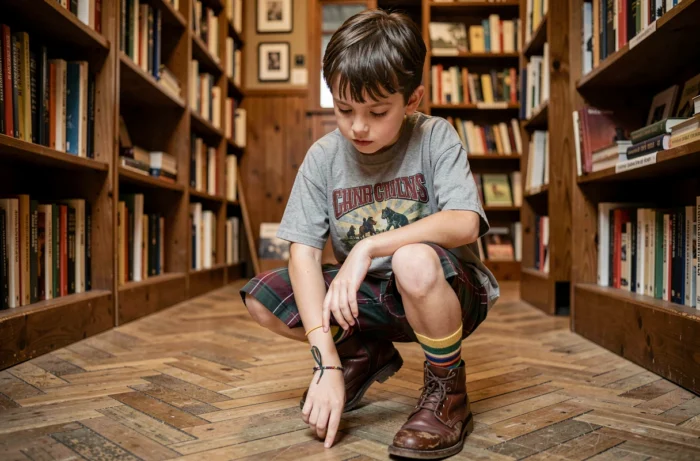
Children’s Clothing Safety Regulations: The Framework that Conditions Creativity
An original children’s garment is worthless if it poses a risk. European regulations impose specific constraints that directly influence the design of pieces, which creative brands must integrate from the outset.
EN 14682 Standard on Cords and Fastenings
Cords in the head and neck area are prohibited for younger children. This standard also strictly regulates the ends of cords on clothing intended for ages 7-14. For a brand that relies on drawstring hoods or cord details, this constraint reshapes the possibilities.
Alternatives exist: snap buttons, Velcro, integrated elastics. Brands that manage to remain creative within this framework are those that transform the constraint into a visual signature, for example, by replacing a cord with an embroidered detail or a fabric loop.
GPSR and Traceability from December 2024
The GPSR regulation, applicable since December 13, 2024, expands product safety requirements in the EU. It imposes enhanced traceability and safety information accessible online for consumer goods, including children’s clothing.
For small creative brands selling online, this means more comprehensive product sheets, up-to-date technical documentation, and increased responsibility for each piece sold. Limited edition capsule collections, common among original brands, must now meet the same level of compliance as larger series.
Vintage and Second-Hand Children’s Clothing: A Naturally Rebellious Style
The resale of baby and children’s clothing is experiencing a marked resurgence of interest. Some vintage pieces become sought after to the point of being resold more easily than recent basics. This phenomenon transforms the children’s wardrobe into a true space for creative expression.
A vintage children’s jean or a corduroy jacket from previous years brings a uniqueness that new collections struggle to replicate. The fibers have been washed, softened, and the garment has already proven its durability.
Three criteria distinguish a good vintage children’s piece from a risky purchase:
- The condition of seams and fastenings, which should withstand several washing cycles without giving way
- The composition of the fabric, verifiable on the care label (pieces made of thick cotton or raw denim age better than synthetic materials)
- The absence of cords or elements non-compliant with the EN 14682 standard, as an older garment was not designed according to current standards
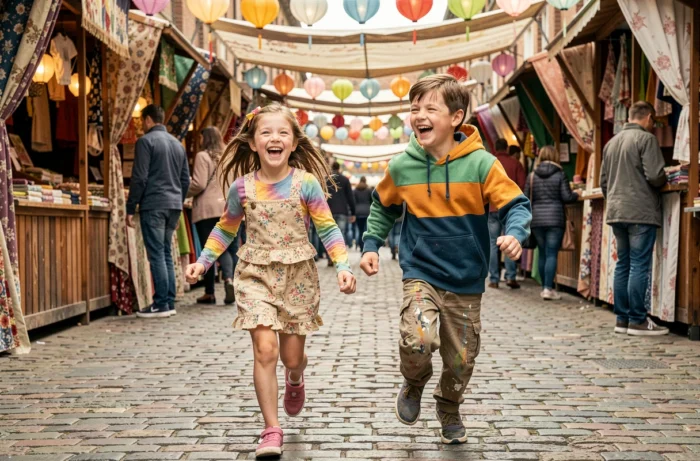
Colors, Prints, and Sustainable Style: Building a Timeless Look for Children
Original children’s fashion is not just about accumulating bold pieces. A coherent rebellious look relies on three or four well-chosen pieces rather than a whole wardrobe renewed each season.
Graphic prints (stylized animals, geometric patterns, typography) serve as identity markers. In contrast, neutral colors (ecru, khaki, terracotta) provide a base for assembling outfits without each piece clashing with the others.
The most effective strategy is to invest in durable basics made from natural materials, then add one or two characterful pieces each season. This approach limits renewal, reduces expenses, and gives the child an identifiable style without overload.
- Durable basics: solid color organic cotton t-shirts, raw denim pants, thick fleece sweatshirts
- Signature pieces: printed jacket, colorful accessories (beanie, bag), shoes with original details
- Vintage or second-hand pieces: one find per season is enough to personalize the whole
The most sustainable children’s style is one that survives stains, play, and machine washes without losing its shape or character. Heavy materials (denim, canvas, fleece) hold up better than fine fabrics, naturally steering the rebellious wardrobe towards robust textures.
Creative children’s fashion gains clarity when it relies on solid textile choices and controlled regulatory compliance. Style, for a child, is built with pieces that last, not with trends that fade after the third wash.