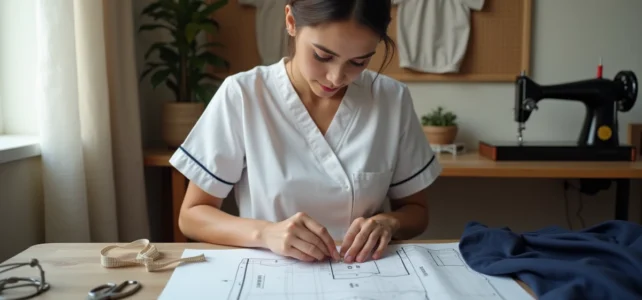
The nurse pouch is sewn with specific constraints: dimensions dictated by the depth of the blouse pocket, a support system that withstands the movements during rounds, and compartments calibrated for tools that change with the dematerialization of billing. Here we detail the technical points that a standard pattern does not cover.
Pattern Sizing According to the Medical Blouse Pocket
Most tutorials offer a fixed width without considering the variability of blouse pockets. Professional medical tunics feature patch pockets whose openings vary by manufacturer. A pattern that is too wide extends beyond, while one that is too narrow slips to the bottom.
We recommend measuring the target pocket before cutting. The width of the pattern should be one centimeter less than the pocket opening, to allow for insertion and removal without straining the seams. The total height, including the flap, should not exceed the depth of the pocket: the flap must fold over the top edge without creating a visible bulk under the blouse.
For freelance nurses on rounds, a free nurse pouch pattern that is suitable includes a deeper smartphone compartment than classic hospital models, as the phone also serves as a billing terminal.
Adapting Compartments to Current Equipment
The contents of a nurse pouch have evolved. The application reader terminal (TLA), long used for freelance billing, has not been marketed since July 1, 2023. Its technical support by the GIE SESAM-Vitale ended on July 1, 2025, and billings via TLA will be rejected by the Health Insurance starting January 15, 2028.
Pouches must now accommodate a new generation Vital card reader, which is more compact, or directly a smartphone equipped with the billing application. Plan for a central compartment at least the width of a standard phone, with sufficient depth so that it does not protrude from the flap.
Choosing Fabric and Interfacing for a Durable Pouch
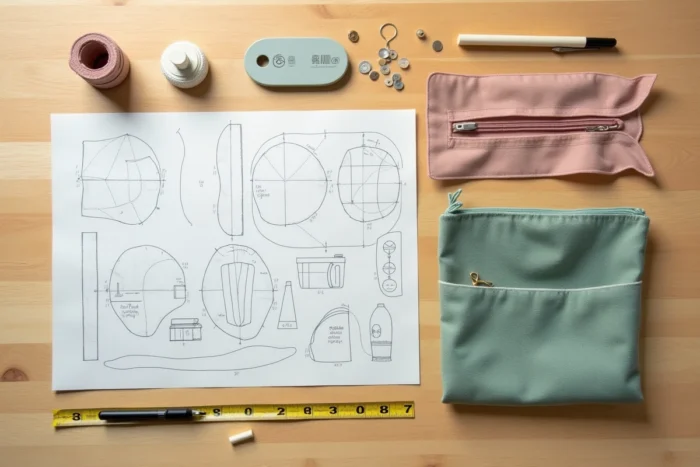
Coated fabric remains the most relevant technical choice for the exterior of the pouch. It resists splashes, cleans easily with a sponge, and maintains its shape over time. Coated cotton offers a good compromise between rigidity and sewing flexibility.
For the inner lining, standard cotton fabric is sufficient. Avoid overly slippery materials (like satin or fine polyester) that allow pens to migrate to the bottom with the slightest movement.
- Exterior fabric: coated cotton or oilcloth, sufficiently rigid to maintain shape without additional interfacing on small pieces
- Lining: tightly woven cotton, which provides enough friction to keep the contents upright
- Thermoadhesive interfacing: to be applied to the flap and back of the pouch if the exterior fabric lacks stability, favoring a medium weight to avoid adding bulk
- Bias or topstitching: protects the edges of the inner pocket and reinforces the folding area of the flap, subject to repeated openings
Maintenance and Hygiene Standards in Care Environments
A pouch worn in a hospital environment comes into indirect contact with contaminated surfaces. Coated fabric can be easily disinfected with a wipe or hydroalcoholic solution. Untreated fabrics absorb products and degrade quickly.
We observe that raw cotton pouches lose their shape after a few washes at high temperatures. Coated cotton withstands daily surface cleaning without deformation, significantly extending the accessory’s lifespan.
Magnetic Closure: Installation and Technical Precautions
The magnetic closure is the most suitable system for professional use on the move. It can be opened with one hand, which is important when the other hand is holding a tray or a sphygmomanometer. Snap buttons require two hands, and Velcro wears out quickly, collects fibers, and becomes noisy.
Installing a bag magnet (claw magnetic clasp) requires local reinforcement. Without reinforcement, the claws of the magnet can tear the coated fabric within a few weeks of intensive use.
- Place a scrap of leather or a square of thick interfacing between the fabric and the back plate of the magnet, on the inside
- Check the polarity before drilling: the two parts of the magnet should attract each other, not repel
- Position the flap magnet first, close the pouch while empty, then mark the exact location of the body magnet for perfect alignment
A magnet misaligned by a few millimeters is enough to compromise the closure and cause the pouch to open unexpectedly during movement. Take the time to test the alignment before permanently fixing it.
Customized Nurse Pouch: Functional Additions to Consider
Some options should be integrated right from the cutting of the pattern rather than added after assembly.
Plastic Pocket on the Back
A transparent PVC pocket sewn onto the back of the pouch allows for sliding in a professional card or badge without opening the flap. Sew the PVC with a straight stitch using a new needle and a Teflon foot: PVC sticks to the standard metal foot and deflects the stitch.
Pen Loop and Scissors Holder
An elastic loop sewn on the inner wall keeps a pen upright without it falling into the main compartment. For round-tipped scissors (used in care), plan for a wider loop or a folded bias loop, secured with an X stitch to withstand repeated pulling.
The addition of a second inner compartment separated by a lined fabric partition creates a dedicated space for the phone, isolated from metallic objects that could scratch the screen. This partition is sewn at the same time as the final assembly, caught in the bottom seam.
The nurse pouch remains an accessible sewing project, provided the pattern is calibrated to the actual materials being transported. With the gradual disappearance of the TLA and the shift to compact digital tools, the dimensions and compartments of models from a few years ago deserve an update.