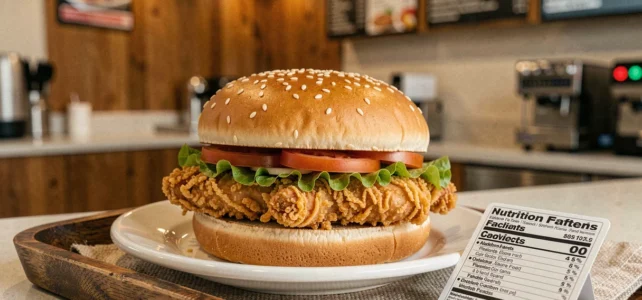
Pepe Chicken offers a generous menu rich in animal proteins, but the brand created by FastGoodCuisine does not provide an official nutritional table on its website. This absence forces one to reconstruct the caloric profiles product by product, cross-referencing the available data from external aggregators. Understanding the actual composition of each item allows for a balance between pleasure and health when placing an order.
Lipid and Protein Profile of Pepe Chicken Products: What the Nutritional Matrix Reveals
The fat/protein ratio is the most discriminating marker for evaluating a fried chicken menu. At Pepe Chicken, the Pepe Tenders show a favorable ratio: for a serving of 3 pieces, there are 30 g of protein against 18 g of fat, resulting in a ratio close to 1.7:1. The Pepe Wings, on the other hand, almost reverse the trend with 34 g of protein for 34 g of fat over 6 pieces.
This difference can be explained by the surface area of the breading relative to the mass of meat. The smaller wings have a crust/meat ratio that is significantly higher than that of the tenders. The tenders remain the most efficient choice in terms of protein per gram of fat consumed.
The Big Box Pepe combines wings and tenders to reach approximately 1050 kcal, 72 g of protein, and 62 g of fat. This format alone covers more than half of the daily recommended fat intake. For those looking to detail the nutritional value and calories of Pepe Chicken, the Big Box represents the most caloric product on the menu, far ahead of the burgers.

Calories of Pepe Chicken Burgers: Breakdown Item by Item
The Pepe Burger Classic stands at 540 kcal for 230 g, with 30 g of protein, 44 g of carbohydrates, and 28 g of fat. In the fast-food chicken sector, this positioning is comparable to a standard sandwich like the McChicken. The carbohydrate load mainly comes from the bread and sauce.
The Pepe Smash Burger doubles the caloric intake compared to the Classic. With its two chicken patties and generous sauce, it exceeds 700 kcal according to estimates from aggregators. The difference does not come from the chicken itself, but from the addition of melted cheese and proprietary sauce.
Hidden Carbohydrates in Sauces and Sides
Sides radically alter the caloric balance of a Pepe Chicken meal. A standard portion of fries adds several hundred kilocalories, and the house sauces (barbecue, cheese) significantly contribute to the intake of simple sugars and fats.
A complete meal with a burger, fries, and a sugary drink can easily represent more than half of an adult’s daily energy intake. Isolating the sandwich alone gives a misleading picture of the actual meal.
Nutritional Transparency of Pepe Chicken Compared to Industry Standards
Major fried chicken brands like KFC or Popeyes have been publishing detailed nutritional tables for several years, accessible online and in restaurants. Each product is listed with its macronutrients, allergens, and sometimes even its micronutrient profile.
Pepe Chicken does not provide structured official nutritional information on its site. The available data comes exclusively from third-party aggregators or independent analyses. For a brand operated through the Taster network and distributed in over a hundred French cities, this gap with competitive standards raises questions.
- KFC France publishes a complete nutritional table by product, including salt, fiber, and saturated fatty acids
- Popeyes UK details the calories of each sandwich and side, along with portion sizes
- McDonald’s France displays nutritional values directly on ordering kiosks and online
- Pepe Chicken relies on delivery platforms that do not require the systematic publication of this data
This lack of information complicates the work of anyone following a precise dietary protocol, whether it involves calorie counting or managing macronutrients.
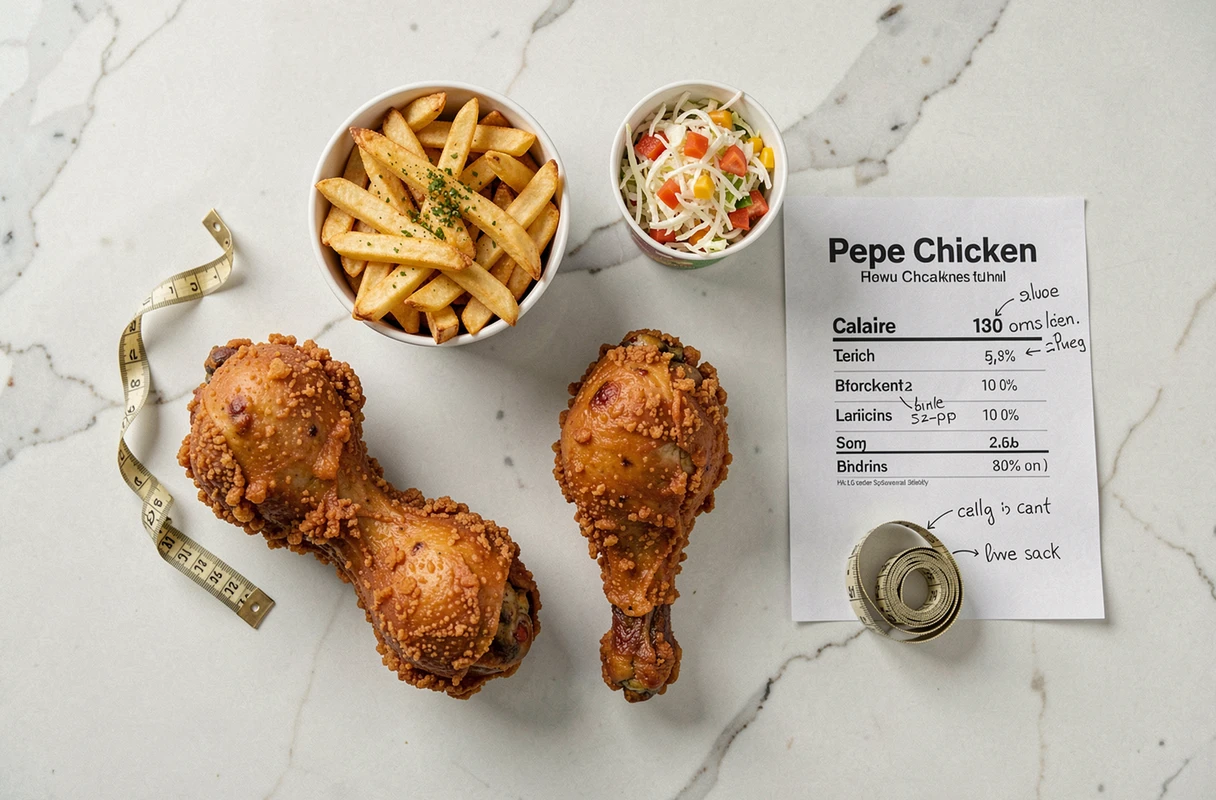
Variability of Portions Across Pepe Chicken Locations
The Taster model relies on shared kitchens (dark kitchens) spread across the territory. Each production point prepares the Pepe Chicken recipes according to a specification, but the inter-site variability in the actual weight of portions remains a blind spot.
In traditional fast food, centralized industrial processes ensure almost perfect homogeneity of the finished product. In a network of dark kitchens, the margin of variation in the amount of breading, the size of chicken pieces, or the dosing of sauces can significantly influence the caloric profile.
Concrete Impact on Nutritional Tracking
A difference of a few grams of breading per tender, multiplied by five pieces, significantly alters the carbohydrate and fat intake of the meal. For a consumer who bases their calculations on the data from an aggregator, the discrepancy between the theoretical value and the actual value can reach a significant proportion.
We recommend considering the available nutritional data as rough estimates rather than absolute values, as long as Pepe Chicken does not publish an official reference.
Optimizing Your Pepe Chicken Order According to Nutritional Goals
The choice between tenders and wings determines the foundation of the meal. For a protein-focused goal with fat control, the tenders consistently win. The chicken thigh, at about 290 kcal for 24 g of protein, is a reasonable alternative for those wanting to limit breading.
- High-protein goal: prioritize the Pepe Tenders 5 pieces (50 g of protein) without added sauce
- Caloric control goal: opt for the chicken thigh with salad, avoiding fries and sugary drinks
- Controlled pleasure goal: the Pepe Burger Classic remains under 550 kcal, acceptable within a balanced daily budget
Avoiding the Big Box Pepe during a caloric restriction period is a matter of nutritional common sense: its 1050 kcal concentrated in a single meal leaves little room for the rest of the day.
Dr. Jean-Michel Cohen has publicly commented on the Pepe Chicken menu, highlighting that some products allow for reasonable food choices even in fast food. The key is to select the least processed items and manage the sides, which often represent the most underestimated caloric component of an order.