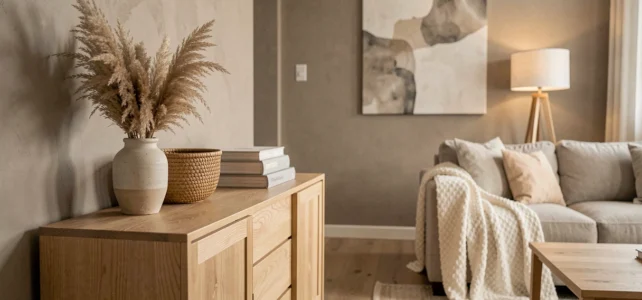
The trendy decoration is based on a simple principle: balancing volumes, materials, and light so that an interior gains coherence without losing character. Current trends favor warm neutrals, recycled materials, and a more selective approach to objects, moving away from decorative accumulation. Understanding these mechanisms allows for sustainable choices rather than following fleeting trends.
Warm Neutrals and Earth Accents: The Logic of Visual Balancing
Current color palettes no longer operate on strong contrasts. The idea is to assemble warm neutral shades (soft ochre, terracotta, copper bronze) that interact with each other without any one dominating.
This principle of visual balancing changes the way one chooses paint or textiles. Instead of applying a bright color to a white wall, one works with layers of similar tones. A soft ochre wall, a natural linen sofa, terracotta cushions: depth arises from the closeness of shades, not their opposition.
For a living room or bedroom, this approach offers a concrete advantage: the room remains coherent even when one element is changed. Replacing a throw or a coffee table does not disrupt the whole, because the palette tolerates variations within the same color family. It’s also a good starting point for anyone wishing to consult the French Home site to find furniture and accessories in these tones.
Recycled Materials and Sustainable Design in Furniture
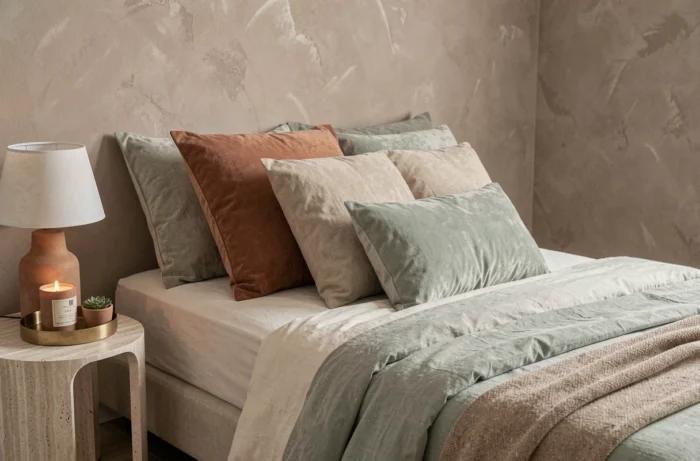
The trend for natural materials (wood, linen, rattan) is well established. What is evolving is the integration of recycled materials into furniture and decorative accessories, with a logic of sustainable design that goes beyond mere aesthetics.
Concretely, this translates into tabletops made from reclaimed wood, lighting fixtures made from recycled metal, or textiles made from regenerated fibers. The interest is not only ecological. These materials bring irregular textures, natural patinas, and imperfections that give character to a room.
How to Identify Quality Recycled Furniture
- Check the origin of the material: a serious manufacturer specifies the source (shipyard wood, melted industrial metal, transformed ocean plastic)
- Observe the finishes: well-crafted recycled material does not mean a raw or neglected appearance; the joints should remain clean
- Test the sturdiness: quality recycled materials offer resistance comparable to new; a tabletop that bends or an unstable leg indicates a manufacturing defect, not a material choice
Mixing a piece made from recycled material with classic furniture creates a more interesting texture contrast than a fully coordinated interior. A reclaimed oak table facing contemporary lacquered metal chairs, for example, provides visual tension without incoherence.
Targeted Lighting and Discreet Technology to Vary Ambiances
Lighting remains the most underestimated lever in interior decoration. Current trends go beyond the simple choice between ceiling lights and bedside lamps. We now talk about targeted lighting: multiple sources, positioned at different heights, that allow for changing the ambiance of a room according to the time of day and use.
A living room can combine a central pendant light for general illumination, adjustable wall sconces for reading, and a discreet LED strip under a low piece of furniture to create ambient light in the evening. The goal is to have at least three levels of light per room.
Integrated Smart Home Without Disrupting Visual Harmony
Motorized curtains, connected bulbs, and smart dimmers are spreading in current decoration. The rule that applies: technology must remain invisible. A connected switch embedded in the wall, a curtain motor hidden in the rod, a speaker integrated into a shelf.
This technical discretion helps maintain the warm atmosphere of an interior while gaining comfort. Programming the gradual rise of light in the morning or the automatic closing of curtains at dusk radically changes the feel of a space without adding a single visible object.
Slow Deco: Selecting Fewer Pieces, but Stronger Ones
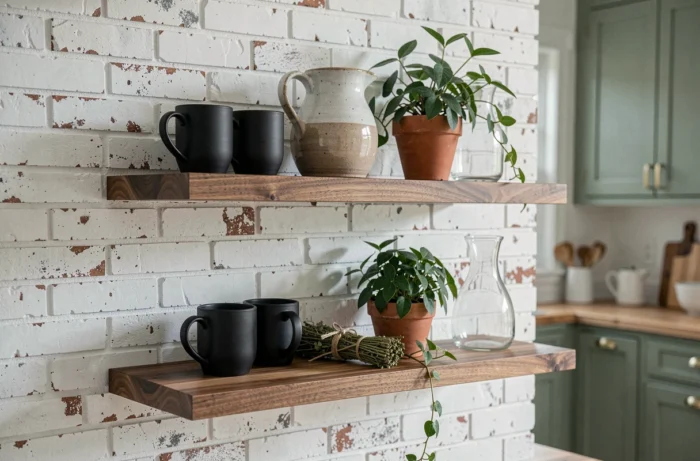
The slow deco movement reflects a fundamental change in how one conceives their interior. The principle: replace the accumulation of decorative objects with the selection of a few pieces with strong personality.
In practice, this means preferring a large artisanal vase placed alone on a console rather than five small objects lined up. Choosing a chair with defined lines instead of multiplying cushions. Hanging a single large artwork rather than a wall of frames.
- In a living room, a quality sofa with a textured fabric (velvet, boucle wool) becomes the focal point, while other furniture remains in the background
- In a kitchen, a clear countertop with a single beautiful utilitarian object (cast iron mill, solid wood board) replaces rows of accessories
- In a bedroom, a well-dressed bed (linen bedding, natural material headboard) is enough to set the tone without overloading the walls or bedside table
An interior with fewer but better-chosen objects ages better than a saturated decor that becomes tiresome after a few months. Slow deco aligns with sustainable design here: investing in a solid and timeless piece costs less in the long run than frequently renewing cheap accessories.
Combining Colors, Materials, and Light in Every Room
The classic trap is to treat colors, materials, and lighting as three separate decisions. The most successful interiors intertwine these three dimensions from the outset.
For a living space, start with the available natural light. A north-facing room with little direct sunlight calls for warm shades (ochre, terracotta) and materials that absorb light (light wood, thick linen). A very bright room can support cooler tones and smooth surfaces (brushed metal, light stone).
Each material reacts differently to artificial lighting. A sage green velvet appears deeper under warm light, more gray under cold light. Testing fabric and paint samples under the actual lighting of the room, both in the evening and during the day, avoids unpleasant surprises.
Trendy decoration ultimately boils down to one discipline: choosing each element based on those that are already surrounding it. A raw recycled material next to a soft textile, targeted light revealing a terracotta hue, a single strong object in an open space. It is this articulation, and not the accumulation of references, that gives an interior its coherence.