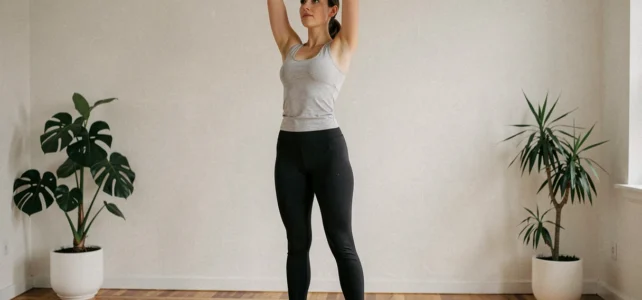
Choosing a sport to improve well-being and motivation involves measuring what each type of physical activity actually produces for the body and mind. The effects vary according to intensity, regularity, and context of practice. Comparing these parameters helps reduce the risk of dropping out and target the desired benefit.
Decision-making burden and dropout: the factor that sports comparisons overlook
Most guides steer the choice towards a goal (weight loss, toning, relaxation). This approach neglects a crucial lever: the ability to reduce the daily decision-making burden. The more a sport requires logistics (travel, equipment, reservations), the higher the dropout rate in the first few weeks.
Recent recommendations emphasize the importance of choosing an activity close to home, integrated into the routine, and tested in a trial session before any commitment. Specifically, a yoga class ten minutes away on foot generates more regularity than a distant gym, even if it is better equipped.
This criterion of proximity and logistical simplicity deserves to be evaluated before the sports objective itself. Resources like esprit-sport.com allow for exploring available disciplines and comparing practice formats according to one’s schedule.

Comparison of sports activities based on their effect on well-being and motivation
The table below cross-references the main families of physical activity with three criteria derived from research context: the effect on stress, the time before feeling an improvement in mood, and the level of logistical constraint.
| Type of activity | Anti-stress effect | Time felt on mood | Logistical constraint |
|---|---|---|---|
| Running / brisk walking | High (sustained endorphin production) | Several weeks of regular practice | Low (no dedicated location) |
| Swimming | High (overall calming, respiratory work) | Several weeks | Medium (access to pool) |
| Yoga / tai chi | High (regulation of the nervous system) | Quick from the first sessions | Low to medium |
| Combat sports | Very high (physical and mental release) | Several weeks | Medium (gym, coach) |
| Climbing | Moderate to high (concentration, confidence) | Variable | Medium to high |
| Team sports | Moderate (social connection, enjoyment of play) | Variable depending on regularity | High (fixed schedules, team) |
Two observations emerge. Activities with low logistical constraints (running, walking, yoga) facilitate regularity, which accelerates mental benefits. In contrast, team sports or climbing provide a social dimension or cognitive challenge that supports long-term motivation, despite heavier logistics.
Short split sessions: an underestimated motivation lever
Breaking the effort into short sequences throughout the day gains credibility as a strategy for maintaining motivation. Recent medical sources confirm that it is not necessary to aim for a long session to achieve a well-being effect.
This approach, sometimes called “exercise snacking,” involves fitting two or three blocks of physical activity lasting a few minutes into one’s daily routine. Climbing stairs, walking after lunch, doing a few exercises upon waking: these cumulative micro-sessions produce a measurable effect on energy and mental health.
Why splitting reduces dropout
The main obstacle to regular sports practice is not a lack of willpower, but the perceived weight of the session. A ten-minute session does not trigger the same resistance as a one-hour slot. Splitting eliminates the psychological threshold effect that leads to procrastination.
For those returning to activity or those with fragmented schedules, this strategy offers a concrete entry point. It works particularly well in winter, when cold and reduced daylight complicate long outings.
Adapting the choice of sport to one’s medical and seasonal profile
Recent recommendations remind us of the importance of checking with a healthcare professional for compatible activities before starting, especially in cases of chronic pain, joint fragility, or returning after a long break. This medical filter logically precedes the choice of discipline.
Sports practice and winter constraints
The season alters the equation. In winter, some activities become less accessible or less enjoyable:
- Outdoor running loses its appeal with the cold, which weakens motivation. Switching to a treadmill indoors or brisk walking during the day limits the disruption of routine.
- Yoga and tai chi, which can be practiced indoors without heavy equipment, maintain their regularity regardless of the weather.
- Swimming in an indoor pool remains stable year-round but requires access to a reasonably located pool.
Choosing a sport that can be practiced twelve months a year avoids the classic cycle of resuming and dropping out that erodes long-term motivation.
The role of the personal trainer in maintaining regularity
Hiring a personal trainer, whether in-person or online, reduces the planning burden. The trainer structures the program, adapts the sessions to the profile, and maintains a form of external accountability. For those who struggle with self-discipline, this lever can make the difference between sustainable practice and an unused subscription.
Effect of endorphins and feeling time: what regularity changes
Sport triggers the production of endorphins, hormones associated with a sense of well-being. This hormonal response is documented for most moderate to high-intensity activities. Improvement in mood and stress often appears after several weeks of regular practice, not after a single effort.
This relatively short delay changes the perspective. It is not about waiting months to feel a mental benefit. However, regularity is the non-negotiable condition: three sessions per week, even if short, produce more than a long and isolated session.
The choice of the ideal sport for well-being and motivation does not rely on a miracle discipline. It is based on an alignment between low logistical constraint, medical compatibility, and a session format that can be sustained over time. The best sport is the one you are still practicing in three months.