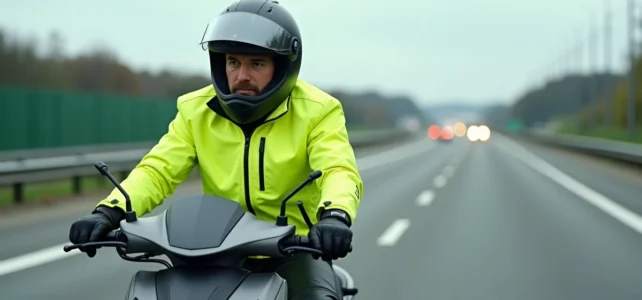
In France, a 125 cm³ scooter is legally allowed to travel on the highway. It falls into the category of light motorcycles, not mopeds. This regulatory distinction opens access to fast lanes and highways, provided that the appropriate license (A1 or B license with 7 hours of training) is held.
The framework seems simple, but riding at 110 or 130 km/h on an engine whose power peaks around 10 to 15 horsepower raises concrete questions of safety, stability, and mechanical wear.
Regulations and B License: What the 7-Hour Training Really Changes
Since 2011, holders of a B license can ride a 125 scooter or motorcycle after a 7-hour training course provided by a driving school. This training covers theory, practical exercises, and road riding. It does not include a final exam: the certificate is issued based on attendance and participation.
The problem lies here. Seven hours are enough to obtain the right to ride on the highway, but not necessarily to acquire the necessary reflexes. Field feedback varies on this point: some riders feel comfortable after a few weeks of urban practice, while others describe persistent stress beyond 100 km/h, especially in crosswinds. When looking for the best 125 scooter for the highway, the question of riding skill weighs as much as the choice of model.
It is worth noting: Italy amended its Highway Code in December 2024 to explicitly allow two-wheelers with an engine size of 120 cm³ or more on highways, provided that the rider is of legal age and has held a license for a certain period. This European regulatory trend confirms that small displacements are gaining ground on fast lanes, but it also highlights that each country sets its own thresholds for power and experience.
Maximum Speed of a 125 Scooter on the Highway: The Real Margin
Most 125 scooters have a maximum speed between 100 and 120 km/h under real conditions. A few GT models reach or slightly exceed the 120 km/h mark, which corresponds to about 110-115 km/h in reality. On a highway limited to 130 km/h, a 125 scooter constantly operates close to its maximum regime.
This situation has several direct consequences:
- The engine runs at high revs for the entire duration of the trip, which accelerates wear on the transmission (belt, rollers, clutch) and increases fuel consumption.
- Overtaking capabilities are nearly nonexistent. Overtaking a heavy vehicle at 90 km/h requires a long distance, exposing the rider to an extended time in the blind spot.
- Stability decreases with speed. A 125 scooter rarely weighs more than 160 kg: wind gusts, turbulence created by trucks, and road irregularities are felt much more than on a machine of 300 cm³ or more.
Riding on sections limited to 110 km/h (ring roads, expressways) remains significantly more comfortable. The engine has a small reserve, vibrations decrease, and mechanical stress drops significantly.
Technical Criteria for a 125 Capable of Handling the Highway
Not all 125 scooters are equal when it comes to the highway. The segment ranges from light urban models to touring GTs, and the behavioral differences are considerable.
Power and Engine Torque
An engine delivering at least 12 to 15 horsepower provides sufficient acceleration to merge onto a fast lane without hesitation. Below this, acceleration when climbing or overtaking becomes too slow to ensure safety.
Weight, Wheelbase, and Wheel Size
A heavier scooter with a long wheelbase is more stable at high speeds. Models equipped with 15-inch front wheels better absorb road imperfections and are more resistant to deviations caused by wind. Smaller 12-inch wheels, common on urban scooters, make riding jittery beyond 100 km/h.
Braking and Active Safety
ABS braking is a non-negotiable criterion for the highway. At high speeds, a wheel lock on wet or gravelly pavement can cause a fall in a split second. Most recent GT models (Honda Forza 125, Yamaha X-Max 125, Piaggio Beverly 125) come with ABS as standard.
Windshield and Aerodynamic Protection
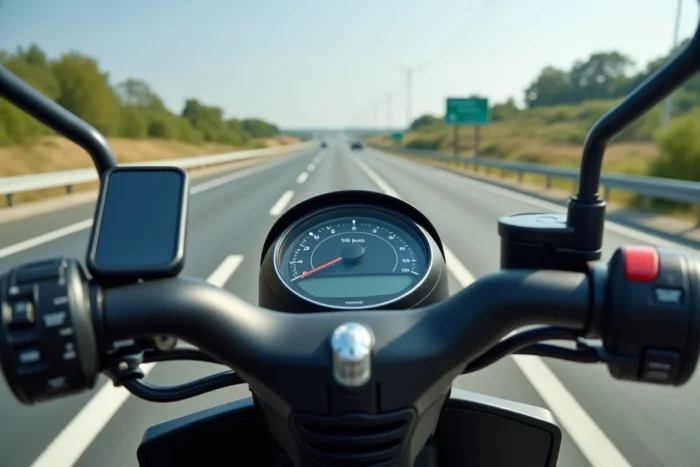
A tall windshield or an enveloping fairing reduces fatigue on long trips. Without protection, wind pressure above 100 km/h tires the arms, neck, and back in less than half an hour. GT scooters are distinguished precisely by this type of equipment.
125 Scooter or Larger Displacement: Where to Draw the Line
The choice of a 125 for the highway often hinges on a licensing or budget constraint. With a B license and the 7-hour training, the maximum allowed displacement remains 125 cm³. Transitioning to an A2 (or A) license opens access to 300, 400, or 500 cm³, which offer unmatched power and stability margins on the highway.
Financially, the price difference between a new 125 GT and a used maxi-scooter can be minimal. A new Honda Forza 125 falls within a price range comparable to that of a used Yamaha TMAX 530 with a few years on the clock. Insurance for a 125, however, remains less expensive, which partially offsets the long-term investment.
For daily use combining city and highway sections at 110 km/h, a well-equipped 125 GT (ABS, windshield, large diameter wheels) fulfills the contract. For regular trips on the highway at 130 km/h over several tens of kilometers, the available data does not allow for recommending a 125 without reservation: the engine operates at its limits, and the active safety margin (overtaking capability, stability in emergency situations) remains structurally inferior to that of a larger displacement.
The 125 scooter on the highway works, but within a specific framework. Short sections, moderate speed, experienced rider, suitable machine. Stepping outside this framework means accepting a level of mechanical strain and risk that each rider must evaluate for themselves.