
Electrolysis remains the only hair removal method recognized as permanent by health authorities, regardless of hair type or skin color. In Montpellier, where sunlight complicates the use of laser for a good part of the year, this technique is experiencing a resurgence of interest among profiles that other methods cannot treat effectively.
Understanding the concrete process of a session, the real limitations of the method, and the precautions related to the local climate allows for approaching a treatment program without unpleasant surprises.
What actually happens during an electrolysis session
Marketing descriptions emphasize overall effectiveness but rarely detail the protocol minute by minute. First and foremost, the practitioner examines the area to be treated to assess hair density, diameter, and growth phase. Only hairs in the anagen phase (active growth) can be permanently destroyed.
The technical gesture involves introducing a sterile, single-use microfilament into the follicular canal without piercing the skin. An electrical impulse, either high-frequency (thermolysis) or galvanic depending on the device used, then destroys the germ cells of the bulb. The practitioner then removes the hair, which slides out without resistance if the follicle has been correctly targeted.
For more information on the detailed process, a guide dedicated to electrolysis in Montpellier on Planète Beauté describes each step of the process, from the initial consultation to post-session follow-up.
The duration of a session varies depending on the area treated. An area like the chin or upper lip typically takes several tens of minutes, while a larger area may require longer sessions. Each hair is treated individually, making the method slower than laser but also more precise.
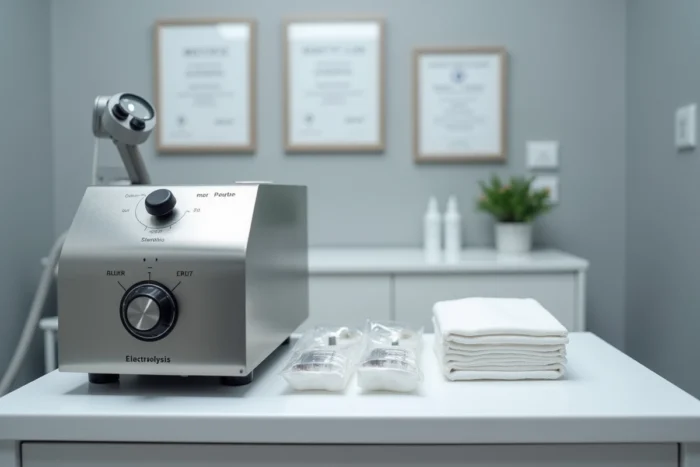
Electrolysis, thermolysis, or laser: which choice depending on the area and phototype in Montpellier
The confusion between galvanic electrolysis, thermolysis (high frequency), and laser hair removal persists in most available content. These three approaches do not address the same clinical situations.
The laser and its blind spots
The laser targets the melanin in the hair. It works well on dark hairs implanted in light skin. However, white, blonde, or red hairs do not contain enough melanin to absorb light energy. The laser then becomes ineffective.
On tanned or naturally dark skin, the risk of burns increases because the skin’s melanin competes with that of the hair. In Montpellier, where sun exposure is high from spring to autumn, this constraint reduces the laser treatment window to a few months per year for certain phototypes.
Electrolysis as a solution independent of phototype
Electrolysis does not depend on hair color or skin color. The electrical current acts directly on the follicle, bypassing melanin. This makes it the only permanent option for light hairs or dark skin.
Hormonal areas (chin, upper lip, abdominal line) pose a particular problem. Even after a successful laser treatment, new hairs may appear due to hormonal fluctuations. Electrolysis then serves as a complement to treat these isolated regrowths that the laser can no longer target effectively.
- White or very light hairs on the face: electrolysis is the only suitable permanent method
- Tanned skin in summer in Montpellier: electrolysis does not present a burn risk related to skin melanin, unlike laser
- Hormonal areas with regrowth after laser: electrolysis treats residual hairs one by one
- Small areas (eyebrows, ears, areolas): the precision of the microfilament is an advantage in these delicate areas
Concrete precautions during the summer in Montpellier
The Mediterranean climate of Montpellier requires adjustments that centers located further north do not need to consider. Electrolysis itself is not contraindicated in summer, but the treated skin remains sensitive for several days after the session.
The waxed area shows slight redness and sometimes mild swelling. Direct sun exposure in the days following increases the risk of post-inflammatory hyperpigmentation, especially on tanned skin. The practitioner generally recommends high sun protection and avoiding direct sunlight on the treated area for at least 48 hours.
Field reports vary on the exact duration of this precautionary period. Some practitioners advise a full week without exposure, while others believe that two to three days are sufficient if the skin shows no visible redness. The patient’s phototype and the intensity of the current used influence this duration.

Frequency of sessions and duration of an electrolysis hair removal program
A complete program requires several sessions spaced a few weeks apart, because not all hairs are in the growth phase at the same time. The hair cycle varies depending on the area of the body: facial hairs have a shorter cycle than those on the legs, which influences the spacing between appointments.
The total duration of treatment depends on hair density, the area concerned, and individual response. A small area like the chin may require several months of follow-up, while a larger area extends over a longer period.
How to evaluate a practitioner in Montpellier
The practitioner’s qualifications directly affect the outcome. The device used (some centers work with Apilus-type devices, known for their precision) and the mastery of the microfilament insertion technique make the difference between effective follicle destruction and a treatment that only results in temporary hair weakening.
- Check that the practitioner uses sterile, single-use microfilaments
- Ensure that a preliminary consultation is offered to assess hair type and define an appropriate program
- Ask what type of current is used (galvanic, thermolysis, or blend) and why it is suitable for your situation
Electrolysis does not have the speed of laser nor its comfort on large areas. However, it remains the most versatile method for permanent hair removal, particularly in a context like Montpellier where the sun limits alternatives for a good part of the year. The choice between the two techniques is not a question of superiority but of suitability to each patient’s profile.