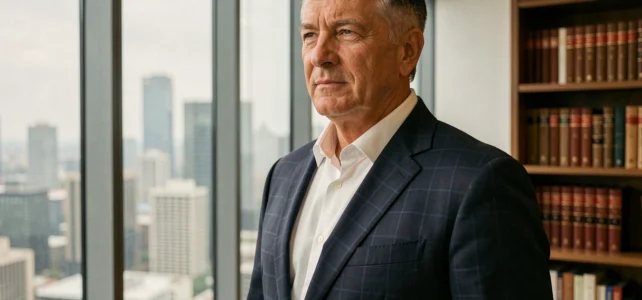
Bruno Pésery, French producer born on May 31, 1959, has built the majority of his career around auteur cinema and art-house films. Founder of Arena Films, he occupies a unique position in the landscape of French production, where his editorial choices have placed him at the crossroads of European festival circuits and contemporary challenges in the sector.
Production Decisions in the Face of Public Controversies
The role of an auteur film producer goes beyond financial structuring. Bruno Pésery illustrated this concretely when, in the context of the release of the film CE2, he deemed that “the timing is no longer right” to maintain the schedule, according to TF1 Info. This statement reveals a rarely documented decision-making process: that of a producer who voluntarily withdraws a film from the release calendar in response to public reactions.
This type of decision engages the economic responsibility of the producer towards investors, distributors, and theater operators. Canceling or postponing a release after incurring promotion costs and reserving digital copies (DCP) represents a significant loss that is difficult to recover in the auteur cinema segment, where box office receipts remain modest.
Withdrawing a film from the release calendar involves much more than the producer’s image. We observe that this practice, still marginal a few years ago, is becoming a crisis management lever in a sector where public accusations can jeopardize the entire distribution chain of a work. For more information on aurablog.org, Pésery’s journey is detailed from a complementary biographical perspective.

Arena Films and Editorial Strategy of the Catalog
Arena Films, the production company founded by Bruno Pésery in Paris, operates under an atypical model. While most independent producers seek to maximize the number of annual releases, Pésery has built a tight catalog focused on works with a strong auteur identity.
La Vie Nouvelle, directed by Philippe Grandrieux, remains one of the most representative titles of this line. The film continues to be exploited in the catalog and programmed in international theaters, as evidenced by its presence in the programming of the Batalha Centro de Cinema in Portugal in 2026. This type of long-term circulation characterizes a production positioning that bets on heritage value rather than immediate yield.
This strategy relies on several mechanisms specific to art-house cinema:
- The licensing of distribution rights by territories, renewable over multi-year cycles, which generates recurring revenue long after the initial release
- Inclusion in the catalogs of film archives and thematic festivals, which maintains the visibility of films without additional promotion costs
- Enhancing works by including them in retrospectives of directors, where the producer’s name circulates as a marker of editorial quality
This model assumes a cash flow capable of absorbing slow returns on investment. Arena Films produces few titles but places each one in a long-term distribution logic.
International Circulation of Auteur Films Produced by Pésery
The presence of Bruno Pésery’s films in international programming in 2026 confirms a distinctive trait of his activity: the ability to circulate works outside the traditional commercial circuit. European art-house theaters continue to integrate his productions into their programming cycles, which goes beyond simple exploitation in French theaters.
For an auteur film producer, international circulation does not follow the same channels as for mainstream productions. No simultaneous release across multiple territories, no coordinated marketing campaign. Distribution relies on networks of programmers, specialized sales agents, and bilateral agreements with local distributors.
Auteur cinema circulates by capillarity, not by saturation. The films produced by Pésery reach their target audience through a prescription chain that goes from festival selectors to independent theater programmers. This circuit, slower, offers a significantly longer commercial lifespan than that of a typical national release.
Bruno Pésery as Producer and Private Life: A Discreet Profile
Bruno Pésery is married to Isabelle Carré, a César-winning French actress, notably for her role in Se souvenir des belles choses. This couple in French cinema remains little exposed in the media, which contrasts with the visibility of many couples in the industry.
This discretion is not anecdotal. It reflects a coherent professional positioning: a producer whose name should remain associated with films rather than celebrity pages. In auteur cinema, the credibility of the producer is built on the works, not on personal notoriety.
Pésery’s filmography spans several decades, with collaborations both French and international. His work with recognized filmmakers in festival circuits has solidified his position as a producer identified by industry professionals, even if his name remains less known to the general public than that of producers involved in films with wider distribution.
Filmography and Collaborations of Bruno Pésery
Bruno Pésery’s journey can be read through a filmography that prioritizes singular projects. Rather than providing an exhaustive list, we highlight the structuring features of his production choices:
- A preference for directors with a strong visual or narrative signature, often already recognized in major European festivals
- Varied formats, from intimate chronicles to psychological dramas, without confinement to a single genre
- Long-term support: multiple collaborations with the same filmmakers, reflecting a logic of companionship rather than opportunism
This profile of a companion producer, common in European auteur cinema, implies an artistic commitment that goes beyond simple financing. The auteur producer validates aesthetic choices as much as he arbitrates budgets.
Bruno Pésery’s activity in 2026 shows that he remains active both in managing his existing catalog and in decisions related to new releases. His public decision regarding CE2 reminds us that producing auteur cinema today requires navigating between artistic demands, economic constraints, and responsibility in the face of public debate. This positioning, built over several decades, makes him a discreet yet structuring figure in French independent cinema.